
Dental Implants
Single & Multiple Implants — 4–7 Days (Stage 1).
From $750 USD
View →
Rebuild lost upper jawbone safely in Ho Chi Minh City using ultrasonic Piezotome sinus elevation, European Geistlich Bio-Oss bone grafting, and autologous PRF healing membranes.
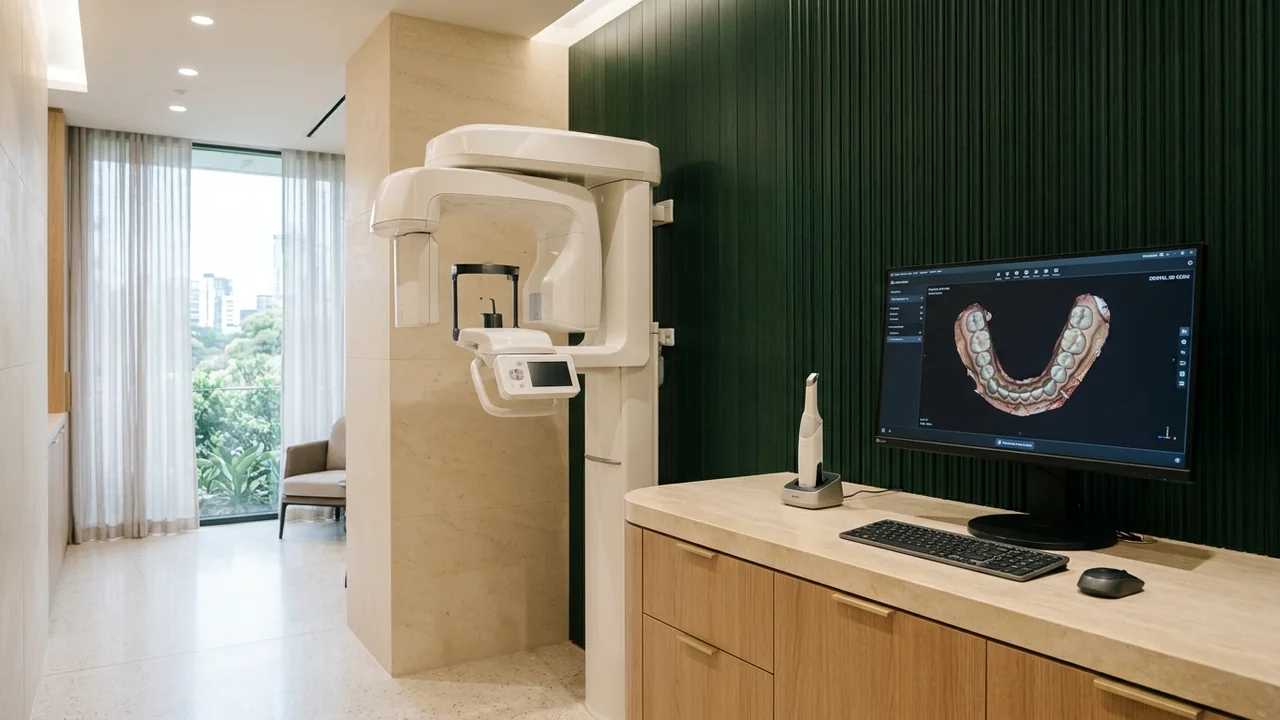
Many international patients seeking dental implants in Vietnam are surprised to learn during their 3D scan review that their upper back jaw no longer holds enough bone height to anchor a titanium fixture safely. Rather than declining treatment or forcing an undersized implant into fragile bone, modern regenerative implantology rebuilds that foundation predictably. At Kind Dental Vietnam in District 1, Ho Chi Minh City, Dr. Nguyen Van Cuong, DDS (Ministry of Health License 0003265/BL-CCHN; ICOI & VOSA member) performs minimally invasive ultrasonic Piezotome sinus elevation and guided bone regeneration (GBR) using traceable European biomaterials and autologous platelet concentrates.
The maxillary sinuses are paired, air-filled cavities positioned directly above the roots of your upper premolars and molars. While natural teeth remain in place, chewing forces transmit gentle mechanical stimulation through the periodontal ligament into the surrounding alveolar bone, keeping bone volume dense and stable. Once an upper back tooth is extracted—or lost to advanced gum disease—two simultaneous biological processes begin:
In patients who have worn a removable partial denture or left an upper molar gap empty for several years, the residual vertical bone height often shrinks to just 2–4 millimeters—far shorter than the 8–10 millimeters typically required to stabilize a standard posterior dental implant under heavy chewing loads. A sinus lift (also called sinus floor elevation) gently lifts the thin lining of the sinus—known as the Schneiderian membrane—and places biocompatible bone scaffolding beneath it so your body can remodel fresh, living bone capable of supporting a long-term implant.
Guesswork has no place near the maxillary sinus. Before recommending grafting, Dr. Cuong reviews a 3D Cone Beam Computed Tomography (CBCT) scan sent pre-flight or captured on day one in District 1, measuring five landmarks: exact residual bone height and width to 0.1 mm; Schneiderian membrane thickness (normal 0.3–1.0 mm, screening out polyps or fluid needing ENT clearance); internal Underwood bony septa; posterior superior alveolar artery pathways to minimize bleeding; and clear sinus drainage (osteomeatal complex patency).
Not every patient with thin bone needs an invasive open sinus surgery. Selecting the least invasive method that achieves predictable primary implant stability reduces swelling, shortens recovery, and keeps international travel schedules manageable.
| Clinical Procedure | Ideal Bone Criteria | Simultaneous Implant? | Bone Maturation Window | Safe Air-Travel Clearance | Kind Dental Fee (USD) |
|---|---|---|---|---|---|
| Socket Preservation / Minor GBR Particulate graft + collagen membrane at extraction |
Fresh extraction socket or minor horizontal ridge defect | Often delayed 3–4 months (or immediate in select sites) | 3–4 months | 2–3 days post-op | $180 – $320 Save ~70% |
| Crestal (Internal) Sinus Lift Hydraulic/ultrasonic lift via implant channel |
5–7 mm residual vertical bone beneath sinus floor | Yes, typically placed during the same visit | 4–6 months total osseointegration | 4–5 days post-op | $350 – $480 Minimally Invasive |
| Lateral Window (Open) Sinus Lift Piezotome side-wall access for major vertical gain |
1–4 mm residual vertical bone height | Staged if <3 mm; simultaneous if 3–4 mm with strong torque | 6–9 months prior to crown loading | 7–10 days post-op | $550 – $650 Save ~75% vs AU/US |
For perspective, a lateral window sinus lift with European xenograft and collagen membrane routinely costs $2,200–$3,800 AUD in Australia or $2,500–$4,500 USD in the United States—excluding the implant itself. Transparent, itemized treatment plans are confirmed in writing on our pricing overview before any surgical appointment begins.
Unlike spinning rotary burs that cut hard bone and soft tissue indiscriminately, Dr. Cuong’s ultrasonic Piezotome micro-surgery oscillates at selective 24–36 kHz frequencies that cut mineralized bone while pausing harmlessly upon contacting the paper-thin Schneiderian membrane, nerves, or blood vessels. Combined with sterile saline cavitation cooling under our hospital-grade surgical protocols, Piezotome access dramatically lowers membrane perforation risk, preserves crisp visibility, and minimizes post-operative facial swelling for a calmer hotel recovery.
Lower-cost clinics sometimes substitute unverified fillers that resorb too rapidly before implants integrate. Dr. Cuong relies strictly on documented European regenerative biomaterials:
Honest surgical screening protects your health and prevents avoidable travel disruptions. While most healthy adults qualify for sinus augmentation or ridge grafting, individual clinical outcomes depend on bone density, sinus health, and systemic healing capacity.
Even in experienced hands, sinus grafting carries documented clinical risks, including minor Schneiderian membrane perforation (reported in 5–15% of open cases in peer-reviewed literature), transient blood-tinged nasal discharge for 24–48 hours, facial swelling peaking at 48–72 hours, or localized sinus infection (<3%). If a small pinhole tear occurs during elevation, Dr. Cuong repairs it immediately using a resorbable collagen patch and autologous PRF membrane so the graft stays sealed. For larger tears, surgery is prudently paused to allow the membrane to regenerate naturally for 8–12 weeks rather than risking loose graft particles entering the sinus cavity.
International patients naturally worry about aircraft cabin pressurization after sinus surgery. Modern commercial airliners pressurize cabins to roughly 6,000–8,000 feet altitude equivalent, creating mild pressure shifts across the nasal passages and eustachian tubes. Following Dr. Cuong’s post-op flight protocol minimizes pressure stress on your newly elevated sinus floor:
Anxious about oral surgery? Review our gentle sedation and comfort-focused care protocols, explore authentic implant systems suited for grafted bone, or message our clinical coordinator via WhatsApp on +84 853 020 003 or our online consultation guide for a complimentary CBCT review prior to booking flights.
During the procedure, Dr. Cuong uses warmed, pain-conscious local anesthesia protocols—with optional oral relaxation—so you feel gentle pressure and ultrasonic vibration rather than sharp pain. Afterward, most patients compare discomfort to a routine tooth extraction, with mild facial puffiness peaking around day two or three. Prescribed anti-inflammatory medication, cold compresses, and autologous PRF healing membranes keep post-operative recovery comfortable and predictable in your District 1 hotel.
Yes, whenever at least 4 to 5 millimeters of healthy native bone remains beneath the sinus floor to anchor the implant firmly at placement. In crestal (internal) sinus lifts, simultaneous implant placement is routine, saving you an entire international trip. However, if your residual bone measures only 1 to 3 millimeters, staging the lateral bone graft first for 6 to 8 months creates a far safer, denser foundation before placing the implant.
For simple socket preservation or minor ridge grafting, most patients are cleared to fly within 2 to 3 days. Following an internal crestal sinus lift, we recommend staying in Ho Chi Minh City for 4 to 5 days. After a larger lateral window sinus lift, a 7-to-10-day recovery window allows suture evaluation, confirmation that swelling is resolving smoothly, and safe air travel with prescribed nasal decongestant support.
Kind Dental Vietnam uses globally documented, traceable European xenograft materials—primarily Swiss Geistlich Bio-Oss mineral particles paired with Geistlich Bio-Gide resorbable collagen membranes—alongside your own autologous Platelet-Rich Fibrin (PRF). Bio-Oss undergoes rigorous multi-stage thermal and chemical purification certified under European CE and US FDA medical device standards to remove organic proteins, leaving a pure sterile mineral scaffold with decades of clinical safety data.
Short wide-diameter implants (6 mm) can occasionally succeed in carefully selected molar areas with dense bone and light bite forces, avoiding sinus elevation altogether. However, in very soft upper back bone measuring under 4 to 5 millimeters—especially in patients who clench or grind—forcing an undersized fixture dramatically increases mechanical overload and premature bone loss. Dr. Cuong evaluates both short-implant and grafting options objectively on your 3D CBCT scan.
Proper bone grafting protects your long-term surgical investment rather than limiting it. Once grafted bone matures and integrates around your authentic Straumann, Nobel Biocare, Osstem, or Dentium fixture, the implant receives our full written warranty as outlined on our warranty page, subject to routine professional hygiene maintenance and adherence to post-operative care guidelines such as avoiding smoking and wearing a nightguard if you grind.
Single & Multiple Implants — 4–7 Days (Stage 1).
Full-Arch Implants — 7–10 Days (Trip 1).
Snap-In Locator & Bar — 5–7 Days (Trip 1).
Complex Bite & Smile Rebuild — 7–12 Days.