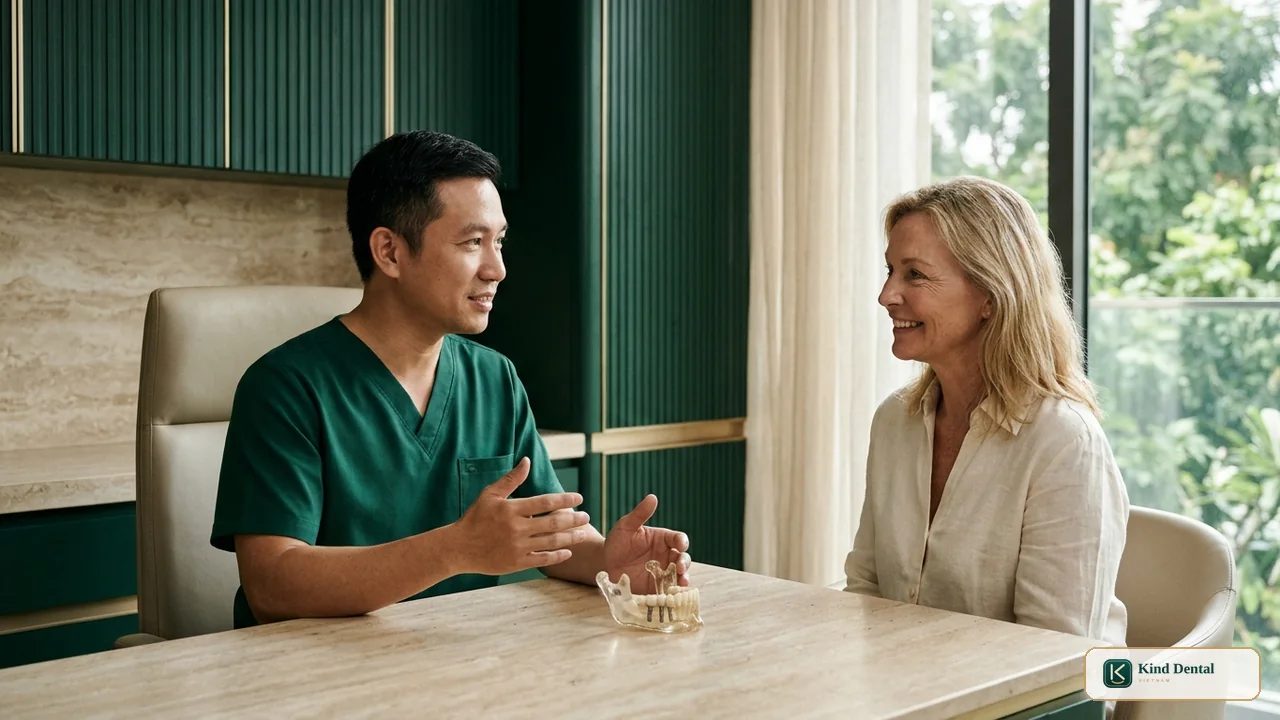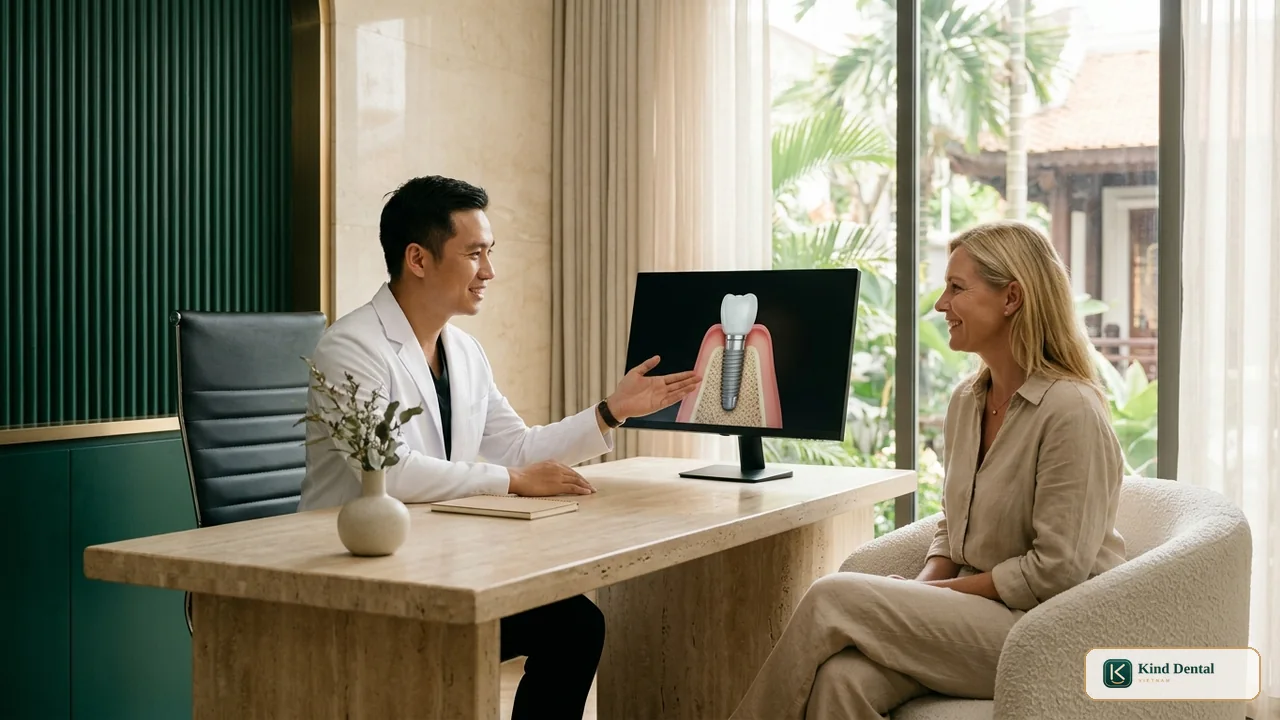

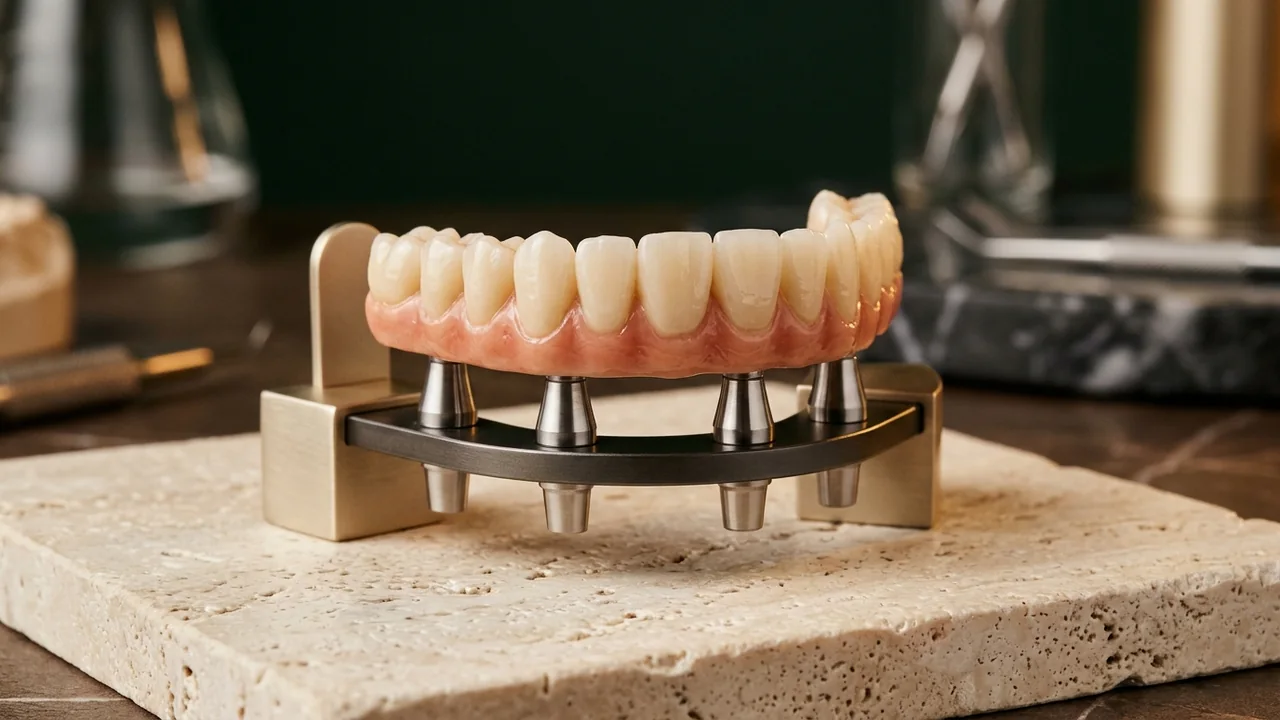
For international patients traveling from Australia, the United States, New Zealand, Europe, or Canada to Ho Chi Minh City for oral surgery, one physiological question carries real safety weight: “How soon after dental implants, bone grafting, a sinus lift, or All-on-4 surgery is it genuinely safe to board a long-haul commercial flight?”
While routine non-surgical procedures like cleanings, veneers, or crowns impose no aviation-pressure restrictions, surgical procedures inside your jawbone and upper maxillary sinus respond measurably to commercial aircraft cabin environments. Flying home 24 hours after surgery to save two nights in a hotel can turn a calm, routine recovery into throbbing mid-flight pain, severe cheek swelling, or—in the case of a sinus elevation—disruption of a freshly placed bone graft. Below, Dr. Nguyen Van Cuong, DDS outlines the exact evidence-based aviation safety rules we follow at Kind Dental Vietnam in District 1, Ho Chi Minh City.
What Happens to a Healing Surgical Site at 35,000 Feet?
Commercial passenger jets cruise between 30,000 and 40,000 feet, with cabin pressure artificially regulated to simulate an altitude of roughly 6,000 to 8,000 feet (1,800–2,400 meters). Four physical changes occur inside that pressurized cabin during takeoff, cruise, and landing:
- Airspace Pressure Shifts (Boyle’s Law): As cabin pressure drops during ascent, trapped gas inside enclosed air cavities—most notably your maxillary sinuses directly above your upper molar roots—expands by approximately 20–30%, then compresses again during descent. If post-operative sinus lining swelling blocks the tiny sinus drainage opening (ostium), pressure cannot equalize smoothly, causing acute facial barotrauma.
- Peak Post-Operative Inflammation Timing: Normal surgical swelling peaks physiologically between 48 and 72 hours after oral surgery. Boarding a flight during Day 1 or Day 2 means hitting peak swelling while seated upright in a dry pressurized cabin with limited medical access.
- Ultra-Low Cabin Humidity (10–20%): Extremely dry aircraft air rapidly dehydrates healing oral mucosa and thickens nasal secretions, making gentle clot stabilization harder during an 8- to 18-hour flight back to Sydney, Perth, London, or Los Angeles.
- Blood Clot & Venous Pressure Dynamics: Subtle changes in ambient pressure, prolonged seated immobility, and mild cabin stress can elevate blood pressure slightly—increasing minor oozing risk if fresh gingival incisions have not yet stabilized.
Master Aviation Wait-Time Guidelines by Dental Procedure
Every patient heals individually, and final flight clearance is always confirmed by Dr. Cuong at your pre-departure clinical check. Use these conservative clinical benchmarks when planning your return tickets from Tan Son Nhat International Airport (SGN).
| Procedure Completed in HCMC | Minimum Wait Before Flying | Recommended Safe Window | Primary Aviation Risk | Pre-Flight Check Required |
|---|---|---|---|---|
| Porcelain Veneers / Zirconia Crowns | Same day (24h preferred) | 24 hours after bonding | None (pressure); high-bite discomfort if unchecked | Mandatory 24-hour bite buffer check |
| Single Straightforward Dental Implant (No Graft) | 48–72 hours | 4–5 days post-surgery | Peak swelling & minor oozing at 48h mark | Wound stability & soft-tissue inspection |
| Multiple Implants / Minor Ridge Bone Graft | 4–5 days | 5–7 days post-surgery | Swelling peak, suture tension, pain management | Suture integrity check & healing review |
| Crestal (Internal) Sinus Lift | 5–7 days | 7 days post-surgery | Sinus pressure shift & ostium congestion | Clinical exam; clear nasal airflow check |
| Lateral Window (Open) Sinus Lift | 7–10 days | 10–14 days post-surgery | Schneiderian membrane pressure / graft displacement | Strict surgeon clearance; zero sinus fluid leak |
| All-on-4 / All-on-6 Full-Arch Surgery | 7 days | 7–10 days post-surgery | Provisional bridge bite comfort, facial swelling, sutures | Provisional torque, soft-diet comfort & wound review |
| Surgical Impacted Wisdom Tooth Extraction | 3–5 days | 5–7 days post-surgery | Dry socket (alveolar osteitis) & cabin throbbing | Clot retention check |
Deep Dive: Why Maxillary Sinus Lifts Demand Extra Cabin Caution
Your upper back molars sit directly beneath the hollow, air-filled maxillary sinuses—separated sometimes by less than 2 to 4 millimeters of bone and a paper-thin lining called the Schneiderian membrane. When bone height is insufficient for an upper molar implant, Dr. Cuong performs either a gentle internal crestal lift or a lateral window sinus elevation using ultrasonic Piezotome instrumentation to lift that membrane safely and place biocompatible bone graft particles beneath it.
During the first 7 to 10 days after a sinus lift, the elevated membrane and newly packed graft rely on delicate fibrin clot sealing. Sudden positive or negative air pressure waves—whether from blowing your nose, sneezing with a closed mouth, drinking through a straw, or flying too early during acute sinus mucosal congestion—can exert hydraulic force directly across that delicate surgical window, risking membrane tear, graft migration into the sinus, or persistent sinusitis.
Strict Sinus-Lift Precautions (Ground & Flight):
- Never blow your nose for at least 2–3 weeks following a sinus lift (dab gently with a tissue instead).
- Always sneeze with your mouth wide open to vent air pressure harmlessly outward rather than upward into the sinus.
- Use prescribed isotonic saline nasal mist and any surgeon-approved decongestant spray precisely as directed—especially 30–60 minutes before aircraft takeoff and prior to descent.
- Avoid scuba diving, snorkeling, high-altitude mountain cable cars, and blowing up balloons or playing wind instruments during the early healing window.
Flying Safely After Single Implants & All-on-4 Full-Arch Surgery
For straightforward single or multiple implants in the lower jaw or non-sinus upper sites, waiting 4 to 7 days accomplishes three critical safeguards: (1) acute Day 2–3 inflammatory swelling peaks and starts resolving while you are still minutes away from our District 1 studio; (2) initial epithelial gum sealing locks the surgical blood clot securely in place; and (3) Dr. Cuong inspects your sutures and confirms comfortable oral opening and medication tolerance before you board. For full-arch All-on-4 patients, our recommended 7–10 day Trip 1 window additionally allows precise delivery and fine-tuning of your fixed provisional bridge so you travel home smiling comfortably on a soft diet.
Phase-by-Phase In-Flight Recovery Protocol for Long-Haul Travelers
Packing a small cabin recovery kit in your carry-on bag makes an 8- to 16-hour flight back to Australia, Europe, or North America dramatically more comfortable. Never pack your prescribed surgical medications inside checked luggage in case bags are delayed.
| Flight Phase | Recommended Comfort & Safety Actions | Strict Actions to Avoid |
|---|---|---|
| Pre-Boarding & Security | Keep prescriptions, English doctor’s letter, saline spray & sterile gauze in carry-on; hydrate thoroughly pre-flight. | Avoid heavy alcohol at airport lounges (thins blood & worsens dehydration/swelling). |
| Takeoff & Ascent | Take scheduled analgesic/anti-inflammatory 45 mins prior if advised; chew gently only on opposite side or sip cool water to swallow/equalize ears. | Never use straws (suction dislodges clots); never perform forceful pinched-nose Valsalva ear popping after upper-jaw surgery. |
| Long-Haul Cruise | Sip cool still water hourly; eat pre-ordered soft meals (congee, yogurt, soup, pasta); walk aisle every 2 hours for DVT leg safety; elevate head with supportive neck pillow. | Avoid crusty bread, nuts, piping-hot tea/coffee, salty snacks, or sleeping completely flat with face pressed on surgical cheek. |
| Descent & Landing | Use approved saline nasal mist 45 mins prior to descent; swallow calmly or yawn gently to open Eustachian tubes. | Do not blow nose forcefully if ears feel plugged after sinus surgery. |
| First 48h Back Home | Resume gentle salt-water/prescribed antiseptic rinses; continue soft diet; message Dr. Cuong on WhatsApp if any concern arises. | Avoid strenuous gym lifting, saunas, or hot tubs during the first 10–14 days post-surgery. |
Clinical Red Flags: When You Should Delay Your Flight
Although surgical complications are uncommon under 3D CBCT guidance and Class-B sterile governance, medical safety outranks flight schedules. Dr. Cuong will advise delaying departure—providing an English medical certificate for flexible airline rebooking—if any of these signs occur:
- Active bright-red bleeding not slowing after 30 minutes of firm sterile gauze pressure.
- Escalating cheek swelling, throbbing pain, or fever >38.0°C developing on Day 4+ (requiring prompt clinical review and irrigation).
- Fluid passing from mouth into nose when drinking after upper-molar surgery or a sinus lift.
- Severe acute cold or blocked sinus infection immediately prior to a post-sinus-lift flight.
Travelers planning long-haul flights—see our Australia to Vietnam dental guide—benefit greatly from flexible return tickets. Share your X-rays directly with Dr. Cuong via our consultation portal or WhatsApp +84 853 020 003 to map safe flight buffers upfront.
Frequently Asked Questions
Will titanium dental implants trigger airport metal detectors?
No. Medical-grade titanium and titanium-zirconium (Straumann Roxolid) implants are non-ferromagnetic and too small to activate airport walk-through scanners or handheld wands. Still, keep your Implant Passport and English discharge summary in your travel folder for personal health records.
Can I fly out 24 hours after a single lower dental implant?
Although lower-jaw implants carry minimal sinus-barotrauma risk, flying within 24 hours is discouraged because post-operative swelling peaks at 48–72 hours. Waiting 4–5 days in Ho Chi Minh City ensures stable clot sealing, a wound inspection, and a calmer flight.
How do I equalize ear pressure on landing without blowing my nose after a sinus lift?
Never pinch your nose and blow forcefully after sinus surgery. Apply surgeon-approved isotonic saline mist (and short-acting decongestant spray if medically cleared) 45 minutes before descent, then equalize gently by sipping cool water repeatedly, yawning slowly, or moving your lower jaw gently side to side.
Will Kind Dental Vietnam provide a letter for surgical medications through airport security?
Yes. Every surgical patient receives a signed English clinical summary from Dr. Nguyen Van Cuong, DDS listing your procedure and oral medications. Because standard 100mL liquid limits still apply to gel packs and rinses, pack empty zip-lock bags to request fresh ice cubes from flight crew onboard.
Does cabin pressure affect porcelain veneers, crowns, or Trip 2 implant crown attachments?
No. Restorative veneers, crowns, and Trip 2 screw-retained crown deliveries do not enter bone or sinus spaces and pose no barotrauma risk. Simply respect our 24-hour bite buffer check after bonding so any tiny high spot is polished before takeoff.
Does standard travel insurance cover flight changes after elective dental surgery abroad?
Most standard policies exclude elective overseas dental treatment unless you add dedicated medical-tourism coverage. Booking flexible-change return flights and planning the full recommended 7–10 day ground buffer upfront protects you far more reliably than squeezing tight departure windows.
Want Honest Clinical Advice on Your X-Ray or Quote?
Send your panoramic OPG scan or an existing treatment estimate via WhatsApp. Dr. Cuong will provide a clear, conservative comparison with zero agency markup.